In the modern fiscal landscape, data is the most valuable asset a CFO possesses. However, raw data without visualization is merely noise. As businesses scale, the need for a comprehensive financial software system has shifted from basic bookkeeping to real-time strategic intelligence. Organizations no longer want to know what happened last month; they need to predict what will happen next quarter.
The Power of Modern Financial Reporting Software
The cornerstone of any data-driven enterprise is high-tier financial reporting software. In 2026, "robust reporting" means more than just generating PDFs. Today’s leading platforms offer dynamic, drill-down capabilities where a user can click on a high-level dashboard metric and trace it back to the original invoice in seconds.
By automating the consolidation of data from multiple entities and currencies, these reporting tools eliminate the "manual Excel hell" that once plagued finance departments. This ensures that stakeholders have access to a single version of the truth, updated in real-time.
Scaling Operations with Financial Management Software
Beyond simple reporting, a holistic financial management software approach integrates every facet of the business. From procurement and inventory to payroll and tax compliance, these systems act as the central nervous system of the company.
The most advanced platforms now utilize "AI-driven anomaly detection." This feature automatically flags duplicate invoices or unusual spending patterns, acting as a 24/7 internal auditor. This proactive management allows finance teams to shift their focus from transaction processing to high-level advisory roles.
Why Your Business Needs Financial Accounting Software
At the foundational level, every organization requires a reliable financial accounting software to maintain the general ledger. However, the 2026 standard for these systems is "autonomy." Modern software now automates up to 90% of bank reconciliations and journal entries.
This automation is particularly vital for maintaining compliance with evolving ESG (Environmental, Social, and Governance) reporting requirements. By embedding compliance rules directly into the accounting workflow, businesses reduce the risk of audit failures and financial penalties.
Deep Insights Through Financial Statement Analysis Tools
To truly understand the "why" behind the numbers, elite firms leverage financial statement analysis tools. These tools go beyond the balance sheet to provide:
- Trend Analysis: Visualizing multi-year growth patterns.
- Ratio Calculators: Real-time tracking of liquidity, solvency, and profitability ratios.
- Scenario Modeling: Predicting how a 5% increase in raw material costs will impact the bottom line.
By integrating these analysis tools directly into the dashboard, executives can perform "what-if" simulations during board meetings, leading to faster and more confident decision-making.
Choosing the Best Finance and Accounting Software
Selecting the right finance and accounting software requires a balance between user-friendliness and technical depth. A system is only as good as its adoption rate among staff. The best solutions in 2026 offer:
- 1.Customizable Dashboards: Role-based views so a CEO sees different KPIs than a Department Manager.
- 2.Mobile Accessibility: Full reporting capabilities on tablets and smartphones for on-the-go decision-making.
- 3.Cloud-Native Security: Multi-factor authentication and SOC2 compliance to protect sensitive fiscal data.
Conclusion: Turning Figures into Foresight
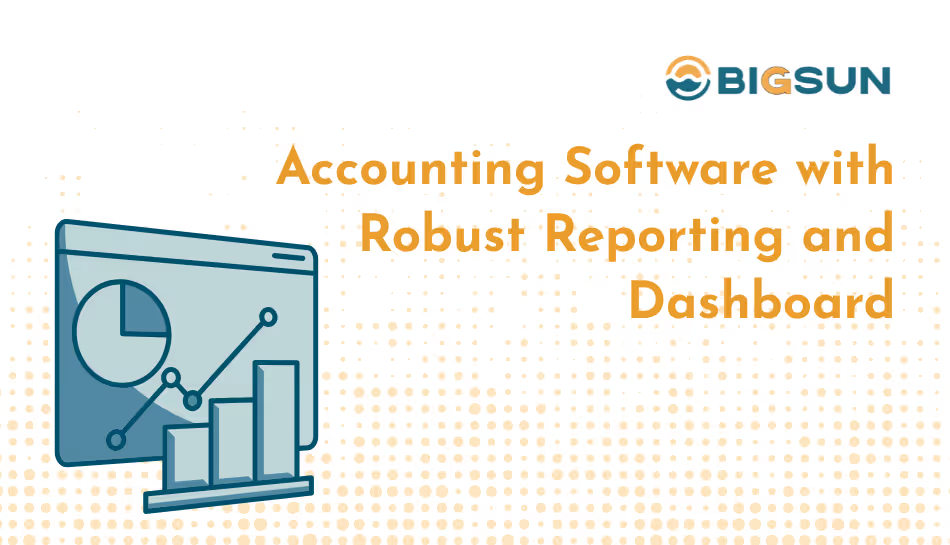
The transition from legacy spreadsheets to an integrated financial software system is no longer a luxury—it is a competitive necessity. By leveraging robust reporting and interactive dashboards, businesses can transform their accounting departments from cost centers into engines of growth.