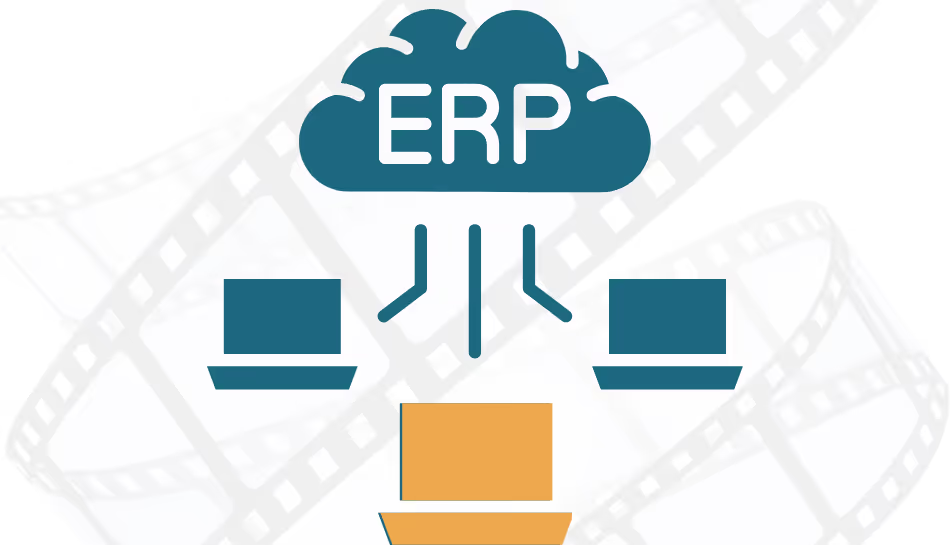
The renewable energy sector, especially solar power, is gaining momentum in India. For all the opportunity it brings, it also introduces a lot of operational complexity. Solar companies have to operate project management, procurement, and inventory, handle installations, do the billing, maintain compliance, and manage long-term maintenance, normally across multiple locations. Performing all of this manually or through disconnected tools will only slow down growth and increase errors.
This is the point at which ERP for renewable energy becomes essential. A purpose-built solar ERP system provides support to solar companies in staying organized, reducing overhead costs, and scaling operations with complete confidence.
Why Solar Businesses Need ERP Software
Solar projects involve a lot more than just selling panels. A company needs to track project timelines, manage vendors, control inventory, handle financials, and meet regulatory requirements. Without a centralized system, teams often wrestle with delayed installations, inaccurate costing, and poor visibility into project performance.
Solar ERP software brings all these activities onto one platform. It helps businesses to smoothly manage operations from project planning to after-installation service and ensures nothing gets missed.
How ERP Supports the Renewable Energy Industry
ERP software for renewable energy is specially designed for solar businesses, having unique workflows. This connects departments and shows real-time visibility into each stage of the operation.
Solar ERP empowers them to properly plan the project, track consumption of material, vendor payments, and profitability project-wise. This level of control is crucial for any company dealing in multiple solar installations.
Key Features of Solar ERP Software
A robust solar ERP system normally possesses:
- Project management tool to track installation milestones and timelines.
- Inventory and procurement control of panels, inverters, and accessories.
- Financial management, costing, billing, and revenues tracking.
- Smooth coordination: Vendor and contractor management.
- Ensure compliance and reporting for regulatory and audit requirements.
- Tracking maintenance and service post-installation.
These features help solar companies keep working efficiently while maintaining transparency across teams.
Benefits of Using ERP for Renewable Energy Companies
One of the biggest advantages of ERP for renewable energy is improved efficiency. Automation reduces manual work and minimizes errors across departments. Teams can spend less time chasing data and more time executing projects.
ERP also improves cost control. With the proper tracking of materials, labor, and overheads, businesses understand true project costs and protect margins. This is especially important within the solar industry, where there has been high pricing competition.
Another major advantage is scalability: as the solar businesses scale up their operations to newer regions or larger projects, the ERP system scales up quite easily without any operational disruptions.
Why Bigsun ERP works well with solar businesses
Bigsun ERP is designed to underpin complex, project-driven industries such as renewable energy. In the case of solar companies, Bigsun provides an integrated platform that links project management, inventory, finance, procurement, and reporting.
It provides real-time visibility into project progress, material consumption, and financial performance for solar businesses. With its flexible structure, it is able to handle residential, commercial, and utility-scale solar projects within one same system.
Bigsun standardizes processes, streamlines compliance and reporting for renewable energy firms to remain audit-ready while maintaining their records accurately. In the end, there is better control, faster execution, and quickened decision-making.
Future-Ready Operations for Solar Companies
Because government policies, subsidies, and energy regulations are constantly changing, solar businesses require agility in systems. ERP software provides the necessary agility to meet the demands of market fluctuations while sustaining operational stability.
With early investment in a solar ERP system, companies will be able to avoid growing pains and instead build a solid foundation for long-term success in the renewable energy sector.
Final Thoughts
With increased installations, ERP systems for renewable energy sources no longer remain optional for the pursuit of sustainable growth by a solar business. From complex project management and inventory to cost control and visibility, modern operations depend highly on solar ERP software. With an agile and scalable solution like Bigsun ERP, solar companies can streamline workflows and minimize risks while continuing to deliver clean energy efficiently and profitably.